

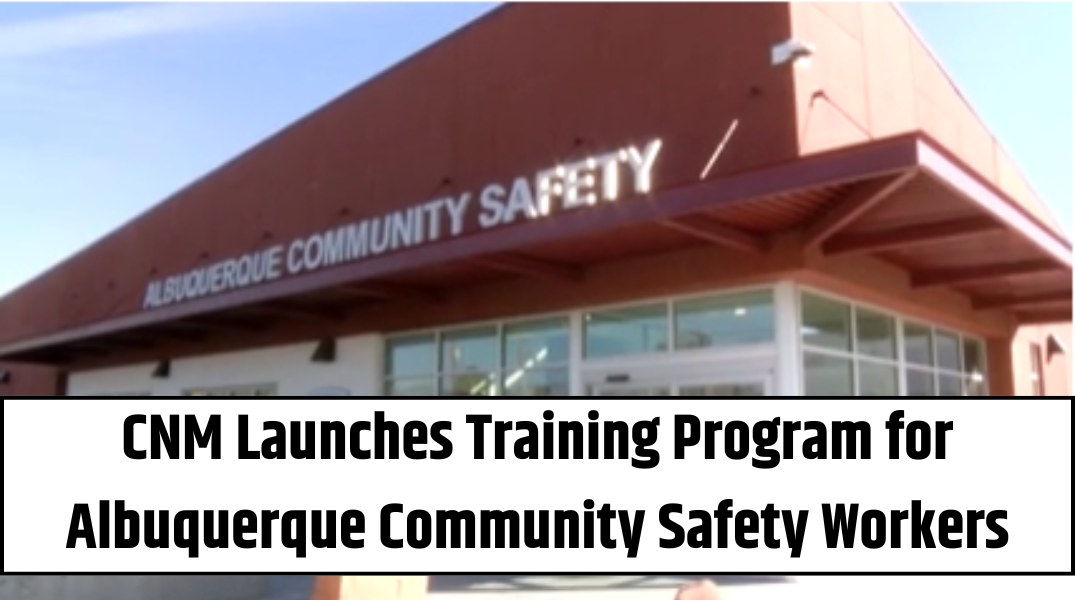
ALBUQUERQUE, N.M. — The City of Albuquerque is taking another major step forward in its efforts to improve how it responds to crises involving mental health, homelessness, and social welfare. The Albuquerque Community Safety (ACS) department, now in its fourth year, has announced a new partnership with Central New Mexico Community College (CNM) to enhance and professionalize its training programs for crisis responders.
Since its creation, ACS has been at the forefront of a shift in public safety—one that focuses less on enforcement and more on care. The department’s teams handle calls traditionally managed by police officers, responding instead with trained professionals who specialize in behavioral health, homelessness, and addiction. The goal: to provide the right kind of help, while freeing law enforcement to focus on criminal activity.
“This is the true evolution of public safety,” said Jodie Esquibel, Director of Albuquerque Community Safety. “We’re building a model that focuses on compassion, understanding, and community-based solutions rather than punishment.”
A Partnership Aimed at Better Training and Higher Standards
Under the new partnership, CNM will provide a structured and comprehensive training program for ACS responders. While ACS already conducts rigorous preparation, this collaboration is designed to elevate those efforts by aligning them with recognized educational standards and certifications.
The program includes 140 hours of classroom instruction and 80 hours of scenario-based training, giving responders both theoretical knowledge and hands-on experience.
“This partnership opens the door for proper credentialing and certifications that are vital for any professional first responder,” Esquibel said. “We’re ensuring that ACS team members receive consistent, quality training that meets high national standards.”
Sebastian Martinez, Senior Director of Business Development for CNM Ingenuity, emphasized the importance of blending classroom learning with real-world application.
Also Read – Albuquerque Launches Educational Campaign to Enforce New Traffic Codes
“Scenario-based learning is essential,” Martinez explained. “Responders get to practice in controlled environments where trainers can observe and provide feedback. It’s one thing to know the theory, but applying it in real-time under stress is what truly prepares them for the field.”
Building Skills for Real-World Situations
ACS responders frequently encounter individuals facing homelessness, mental health crises, substance use challenges, or domestic disputes. The work demands both technical expertise and emotional intelligence. Through CNM’s program, trainees will develop a deeper understanding of de-escalation techniques, crisis communication, trauma-informed care, and ethical decision-making.
“They’re not just learning how to respond—they’re learning how to connect,” Esquibel said. “Every situation is different, and our responders have to be able to assess, adapt, and act with empathy.”
Scenario-based training will simulate real emergencies to help responders practice under realistic conditions. These exercises can range from responding to a person in emotional distress to helping someone find shelter or connect with social services. Trainers will observe each scenario, provide feedback, and help participants refine their approach.
Martinez said the approach ensures that “each responder not only learns the skills but embodies the mindset of service and compassion that defines ACS’s mission.”
A Hybrid Model for Accessibility
While details of the program are still being finalized, both ACS and CNM expect to adopt a hybrid training model. This would allow flexibility for workers to attend in-person sessions at CNM’s campus or receive on-site training where they work.
“We’re designing a system that meets responders where they are,” Martinez explained. “The goal is to make the training accessible and practical, without disrupting the essential services ACS provides every day.”
The hybrid model also allows for adaptability as the program expands. Trainers from CNM may travel to ACS facilities, conduct workshops in the field, or host online learning modules, ensuring that new hires and veteran responders alike receive continuous professional development.
Creating a National Example
Beyond the immediate benefits for Albuquerque, both organizations hope this partnership will serve as a model for other cities across the country.
“We’re looking at something much bigger than a local training program,” said Martinez. “The idea is to create a national framework—a proven, replicable system that other communities can use to develop their own crisis response units.”
CNM plans to document its training approach, gather data on outcomes, and share best practices with other municipalities seeking to implement similar models. With cities nationwide facing rising homelessness and mental health challenges, Albuquerque’s ACS initiative has already drawn attention as a forward-thinking solution.
“We as a team—meaning the City of Albuquerque and CNM—want to set the national standard,” Martinez said. “This collaboration could redefine how cities across America approach community safety.”
Four Years of Progress and Growing Impact
Since launching in 2021, ACS has handled tens of thousands of calls that might otherwise have gone to police officers or firefighters. By diverting these nonviolent situations to trained crisis responders, the department has reduced strain on emergency services while offering more humane and targeted support to those in need.
“Four years in, ACS has proven that compassion and safety can go hand in hand,” Esquibel said. “We’re helping people get the assistance they need rather than sending them through the criminal justice system unnecessarily.”
The addition of CNM’s structured curriculum marks a new phase in that evolution—one that focuses on professional growth, accountability, and long-term sustainability.
Looking Ahead
As the collaboration between ACS and CNM develops, officials hope to see measurable improvements in responder performance, client outcomes, and community trust. The training will not only enhance skillsets but also foster leadership among ACS members, some of whom may go on to mentor or train others in the future.
Also Read – Bosque School Highlights Alumni’s Inspiring Story of Survival
“This partnership ensures that our responders are well-equipped to meet the city’s needs now and in the years to come,” Esquibel said. “It’s about setting them up for success and building a culture of excellence.”
In many ways, the initiative reflects a broader movement in public safety—one that prioritizes care over control and seeks long-term solutions for social challenges. Albuquerque’s model may soon inspire other cities to rethink how they respond to those in crisis.
“This is more than a program,” Martinez added. “It’s a transformation in how we think about public safety. And it’s only just beginning.”