


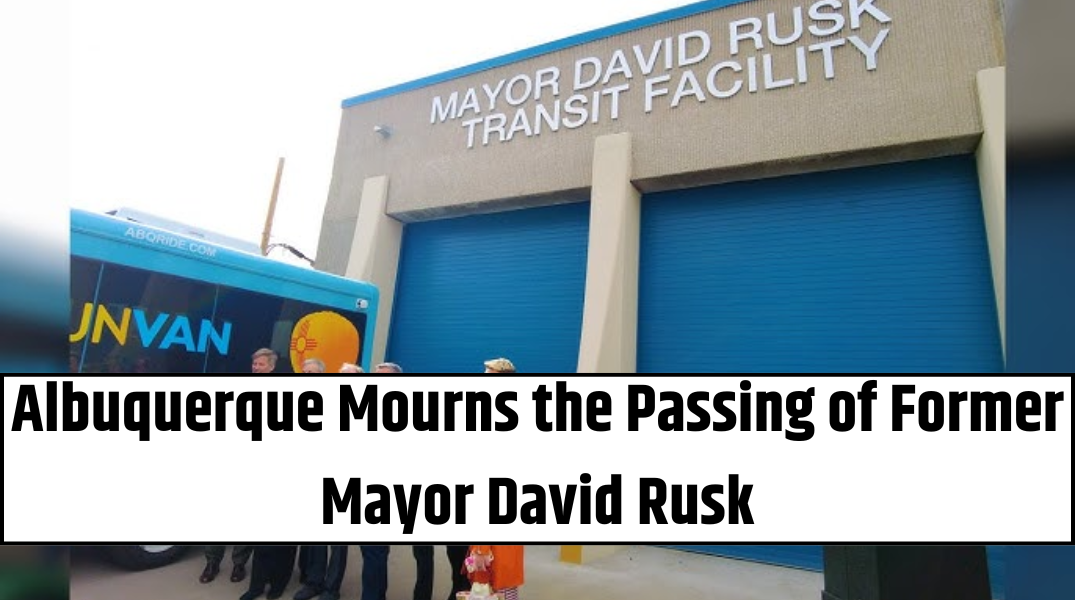
Albuquerque is mourning the loss of one of its most influential civic leaders. David Rusk, who served as the city’s mayor from 1977 to 1981, passed away this week, leaving behind a legacy defined by public service, urban innovation, and a deep belief in community-centered progress. His career extended far beyond his four-year term, but it was during these years that he helped steer Albuquerque toward modernization while preserving cultural heritage that remains essential to the city today.
Rusk, who was honored earlier this year for his contributions to the city, is being remembered not only for the policies he championed but also for the vision he brought to public office—one focused on balancing development with quality of life and ensuring that future generations could benefit from his work.
A Mayor Focused on Mobility and Urban Accessibility
One of Rusk’s most noteworthy accomplishments as mayor was his push to strengthen Albuquerque’s public transit system. At a time when cities across the nation were grappling with rapid growth, rising traffic congestion, and shifting demographic needs, Rusk recognized the importance of creating a reliable and accessible transportation network.
Under his leadership, Albuquerque expanded its transit routes and invested in infrastructure designed to connect residents with employment hubs, educational institutions, and core neighborhoods. Rusk often emphasized that public transportation was not simply a convenience—it was a pillar of economic opportunity and urban equity. His advocacy laid the groundwork for systems that still operate today, serving thousands of daily riders.
Preserving Culture: The Renovation of the KiMo Theatre
Beyond transportation, Rusk played a pivotal role in revitalizing the KiMo Theatre, one of Albuquerque’s most iconic landmarks. Built in 1927, the KiMo blends Art Deco style with Pueblo architectural influences, making it one of the country’s most unique historic theaters. By the 1970s, however, the structure had fallen into disrepair, and its future was uncertain.
Also Read – Suspect Arrested After Fatal Beating at West Side Gas Station
Rusk recognized the cultural and historical importance of the venue and pushed for its renovation. His support and leadership ultimately helped secure its restoration, ensuring that the theater could continue to serve as a community gathering place and artistic venue for decades to come. Today, the KiMo remains one of Albuquerque’s most celebrated architectural treasures, and its orchestra pit bears Rusk’s name as a tribute to his dedication.
A Family Rooted in Public Service
David Rusk’s life was steeped in a tradition of public service long before he entered Albuquerque’s political arena. His father, Dean Rusk, served as Secretary of State under Presidents John F. Kennedy and Lyndon B. Johnson, shaping U.S. foreign policy at some of the most pivotal moments in modern history. Growing up in such an environment no doubt influenced Rusk’s own sense of civic duty and policy-driven leadership.
That legacy of service continued within his own family. One of Rusk’s sons works as a teacher and soccer coach at Cleveland High School, continuing the tradition of contributing to local communities and impacting young lives. Those who knew Rusk often remarked that he carried his family’s ethos with humility, focusing not on prestige but on meaningful work that improved people’s lives.
Honored for a Lifetime of Dedication
Earlier this year, David Rusk was formally recognized for his role in shaping the city during a ceremony that highlighted both his accomplishments and the long-lasting effects of his leadership. Former colleagues, civic leaders, and residents spoke about Rusk’s devotion to public service and his belief in engaging citizens in the decision-making process.
Those who worked with him during his time in office recalled his thoughtful approach to city management and his willingness to listen to a wide range of voices—including those who often felt overlooked. Rusk believed that a successful city was one built on collaboration and shared responsibility.
Impact Beyond Albuquerque
Although he is best known locally for his mayoral term, Rusk also gained national attention through his work as an author and urban policy expert. After leaving office, he wrote extensively about city planning, regional cooperation, and the challenges of urban inequality. His books and research became reference points for policymakers, scholars, and community leaders across the country.
Also Read – Man in Albuquerque Gets Prison Time for Possessing Gun Illegally
This broader body of work reflected his long-standing interest in how cities evolve and how public policy can shape more inclusive and sustainable communities. Even outside elected office, Rusk remained a vocal advocate for smart growth and metropolitan reform.
A Lasting Legacy
As Albuquerque reflects on David Rusk’s passing, many are recognizing how profoundly the city was shaped by his leadership. His efforts to improve transit, preserve cultural heritage, and strengthen community connections helped define a pivotal era in the city’s development.
Rusk’s influence continues to be seen today—in the buses that serve thousands of residents, in the restored beauty of the KiMo Theatre, and in the ongoing conversations about how Albuquerque can grow while maintaining its unique character.
While his passing marks the end of an era, the work he accomplished ensures that his legacy will endure. Albuquerque will continue to benefit from the foundations he helped build, and the values he championed—accessibility, community engagement, and preservation—will remain guiding principles for future generations of leaders.