

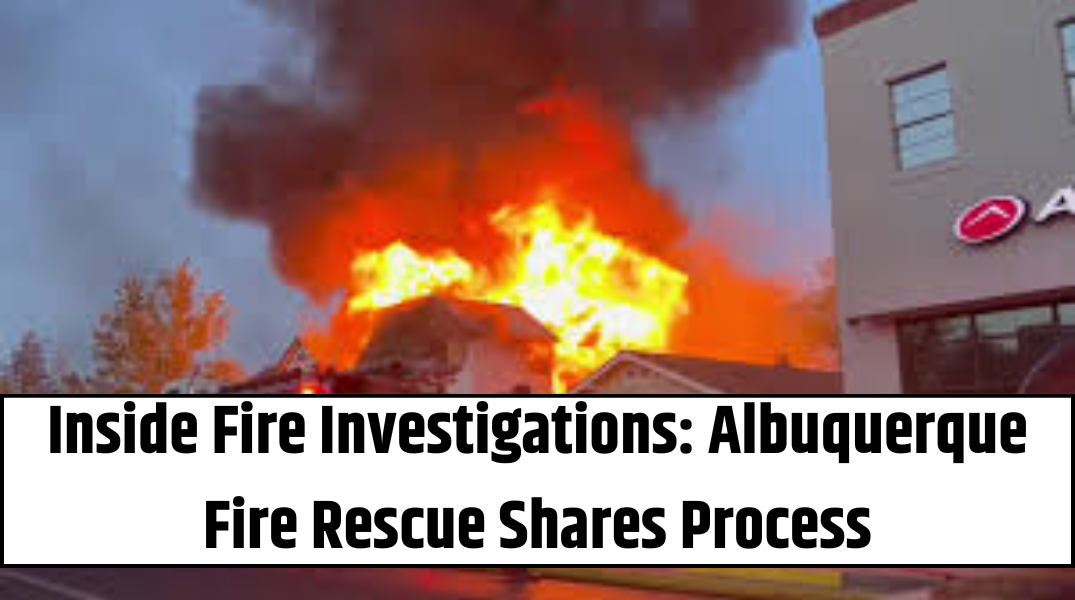
ALBUQUERQUE, N.M. — Fires are an unfortunate reality in Albuquerque, and according to Albuquerque Fire Rescue (AFR), the majority of them are human-caused. While accidental fires are common, investigators often face a challenging question: what does it take to prove that a fire was intentionally set and to hold someone accountable for arson? AFR provides insight into the complex process of investigating arson cases, highlighting both successes and the difficulties that come with identifying suspects.
High-Profile Cases and Evidence Gathering
One notable example from this year is the fire at Marshalls, which led to an arrest. Lieutenant Jason Fejer of AFR explained, “The Marshalls fire that recently happened is a good example of an event where they had enough information and enough evidence to actually identify a person of interest and make an arrest.” In this case, Nathan Castillo was charged with arson, a second-degree felony.
Lt. Fejer emphasized that this case represents one of the rare instances in which fire investigators could pinpoint a suspect and move forward with criminal charges. A significant factor in the Marshalls investigation was the presence of security cameras, which provided investigators with crucial evidence.
When fire investigators arrive at a scene, not every fire is considered arson. However, the personnel tasked with these investigations are highly trained to handle criminal cases. AFR’s fire investigators are sworn firefighters who also attend law enforcement training, making them commissioned law enforcement officers through both the Albuquerque Police Department (APD) and Bernalillo County Sheriff’s Office (BCSO). This dual training allows them to investigate fires from both a firefighting and criminal perspective, giving them the skills needed to identify potential arson.
Challenges in Identifying Arsonists
While the Marshalls case had a clear resolution, not all fire investigations lead to arrests. Lt. Fejer cited the Bosque fires as an example of the difficulties investigators face. Although officials believed some of the fires were intentionally set, there was insufficient evidence to identify a suspect.
Also Read – Bernalillo County Animal Shelter Appeals for Donations
Fires that occur outdoors or in unoccupied areas present additional challenges. Even if investigators determine that a fire was intentionally set, charging someone with arson can be difficult if no property is significantly damaged or if no one is injured. This means that many intentional fires may never lead to criminal charges, despite clear evidence of human involvement.
Degrees of Arson and Legal Thresholds
Arson charges vary depending on the degree of the felony, which is typically determined by the dollar amount of damage. According to AFR:
-
Fourth-degree felony arson applies to damages as low as $500.
-
Third-degree felonies involve higher damages.
-
Second-degree felony arson is charged when damages exceed $20,000.
Lt. Fejer explained, “A lot of times there might be a fire in an unoccupied dwelling, a dumpster, or an outdoor area. If the dollar amount doesn’t reach the threshold for a felony, it might not qualify as second- or third-degree arson.” This creates a situation where the severity of criminal charges is not always proportional to the danger posed by the fire, particularly in cases where property damage is minimal but the potential for harm is high.
Accidental vs. Negligent Fires
AFR emphasizes the distinction between accidental fires and those that are negligent or intentional. Negligent arson occurs when a fire is caused by reckless behavior, such as leaving a burning object unattended. If this results in property damage or injuries, it can lead to a fourth-degree felony.
Intentional arson, on the other hand, requires clear evidence that the suspect deliberately set the fire. This often includes items such as surveillance footage, witness statements, physical evidence collected from the scene, or forensic analysis of the fire’s origin. The burden of proof is high, making intentional arson cases among the most challenging to prosecute.
The Criminal Justice System and Arson Cases
Even when a suspect is arrested, the legal process can present obstacles. In some instances, charges are dismissed if a suspect is deemed incompetent to stand trial, leading to their release. This underscores the reality that an arrest is only one part of the process—successful prosecution requires meeting legal standards and proving the case beyond a reasonable doubt.
Also Read – Long-Term Plans Underway for Rio Bravo Bridge Renovation
AFR also notes that communication and transparency are ongoing priorities. The department is working to improve public updates on fire investigations, including posting accurate descriptions of causes once they are determined. This helps inform the community and clarifies the distinction between accidental fires, negligent fires, and criminal arson.
The Role of Fire Investigators in the Community
AFR’s fire investigators play a crucial role in both public safety and criminal accountability. By combining firefighting expertise with law enforcement training, these officers can investigate the cause of fires, collect evidence, and work alongside legal authorities to pursue arson cases when appropriate. While high-profile cases like Marshalls demonstrate their ability to identify and prosecute arsonists, many fires—particularly outdoor or low-damage fires—highlight the challenges inherent in this work.
In the end, preventing arson and holding those responsible accountable requires a combination of investigative skill, forensic evidence, community cooperation, and legal scrutiny. Albuquerque Fire Rescue continues to adapt its procedures to address these challenges, aiming to reduce fires in the metro area while ensuring that intentional acts are thoroughly investigated and prosecuted.